

A private company developing a major critical metals discovery
About Canadian Energy Metals
A Leader In Canadian Critical Metals Development
CEM has identified and is actively developing a significant critical minerals discovery in East-Central Saskatchewan. The resource stands out not only for its strategic location, but also for its large size. These have been demonstrated by comprehensive evaluation, assessment and piloting.
The project benefits from established infrastructure and the metals targeted by CEM are essential to Canada’s advancement in aerospace, defence, and sustainable energy.
CEM is positioned to play a leading role in propelling North American growth across these vital sectors.

Thor Project
Measured Resource, Strategic Applications
Our project combines a substantial and demonstrated resource base with the ability to produce high-value metals that are in demand for Canada’s sustainable energy, defense, advanced materials and aerospace industries. These include:
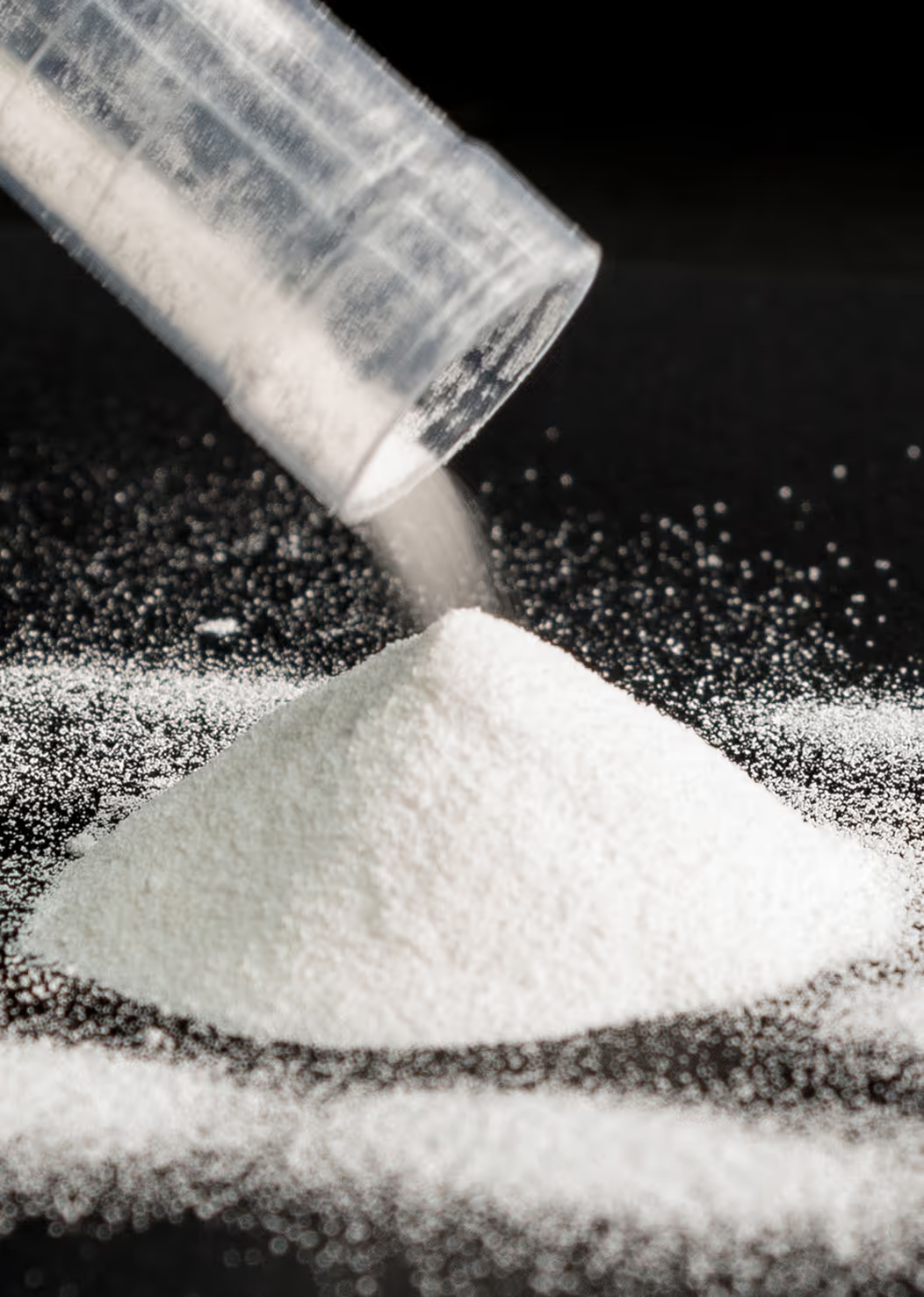
Chemical Grade Alumina (CGA)
High Purity Alumina (HPA)
Smelter Grade Alumina (SGA)
Scandium, Vanadium and Other Metals
By The Numbers
A Major Critical Metals Discovery, Assessed and Tested
Our project pairs a proven critical metals discovery with an established infrastructure base and a clear path to development. With strong local partnerships and a supportive regulatory environment, Project Thor is positioned to advance as a shovel-ready project for Canada’s low-carbon economy.
16
Billion Tonnes of Measured Resource
33
Billion Tonnes of Indicated Resource
87
Billion Tonnes of Inferred Resource
1. Technical Report, Thor Project, Tisdale, Saskatchewan, Canada; Stantec, March 12, 2026.
2. Based on Al2O3 Cutoff (wt%) of 10%.
3. Thor Mineral Resource Estimates, Average Grade and Metal Content has been prepared in conformity with CIM “Estimation of Mineral Resource and Mineral Reserves Best Practices” guidelines and reported in accordance with the Canadian Securities Administrators NI 43-101. Mineral resources are not mineral reserves and do not have demonstrated economic viability. There is no certainty that any mineral resource will be converted into mineral reserve. CIM definitions are followed for classification of Mineral Resources.
4. Inferred Resources are not included in any PEA economics reported by CEM.
Location
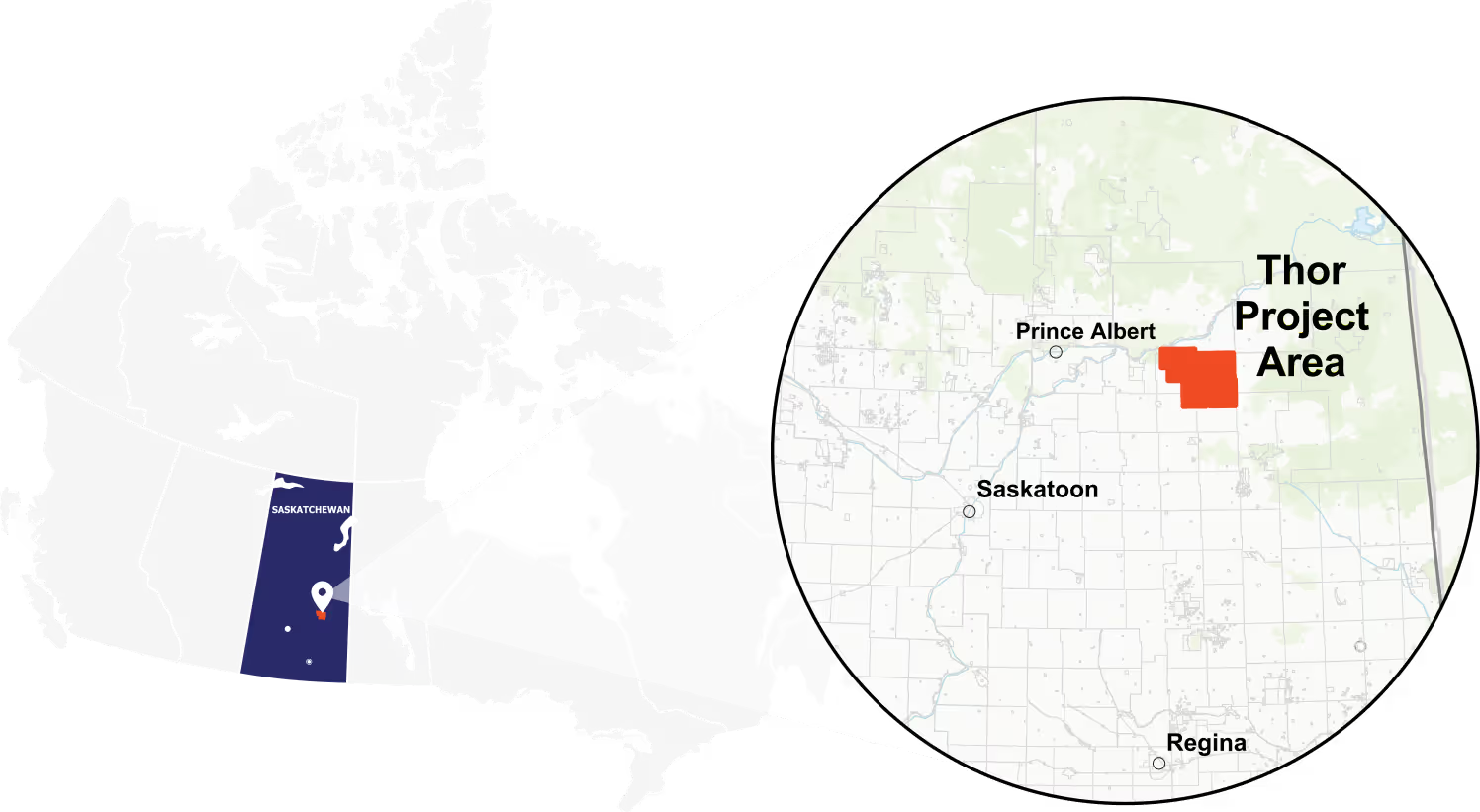
The Thor Project is located in East-Central Saskatchewan. Saskatchewan is well-regarded globally for its mining leadership and resource activity. Located outside of the boreal forest, the project lands total 1,111 square miles.
FAQs
Questions and Answers
When was the Company incorporated?

What are the Company’s key projects or assets?
As of June 30, 2026, the Company holds 287,873 hectares of exploration rights. These rights can be converted to development leases in due course.
The Project’s polymetallic black shale resource offers a potential strategic alternative to global bauxite supply. The resource comprises aluminum as well as scandium and vanadium. Piloting to date has confirmed the production of High Purity Alumina (HPA) and Chemical Grade Alumina (CGA), with testing continuing for the production and extraction of Smelter Grade Alumina, scandium, vanadium and Rare Earth Elements.
What makes this deposit significant within Canada and North America?
Geography. Saskatchewan has long been regarded as one of the best mining jurisdictions in Canada and the world.2 The Project is close to the geographic centre of North America and has a well-developed offering of power, road and services infrastructure. On-site rail provides transport to markets throughout North America.
Strategic. The Thor Project has the potential to position Canada as a secure North American source of alumina, strengthening supply chains and playing a key role in the growing demand for metals in aerospace, defence and clean energy.
1. U.S. Geological Survey, Mineral Commodity Summaries, January 2025, “Bauxite and Alumina”, p. 43. https://pubs.usgs.gov/publication/mcs2025
2. Fraser Institute, Annual Survey of Mining Companies, 2025. https://www.fraserinstitute.org/sites/default/files/2026-02/annual-survey-of-mining-companies-2025.pdf
What stage of development is CEM currently at?
The PFS will provide greater engineering detail, improved cost certainty, refined operating assumptions and more detailed financial modelling. It represents a significant de-risking milestone when compared to PEA results.
Each of these steps incrementally reduces technical, execution and financing risk, which in turn supports improved valuation metrics.
How is CEM advancing the feasibility of the project?
The Thor Project is a greenfield project that demonstrates very good potential for advancement to development. The PEA results are positive and support the rapid advancement of the project. However, the PEA is just the first in a series of many de-risking steps.
Note that PEA financial results are neither definitive, nor do they represent the valuation of the Thor Project or the Company. They do not provide the same level of detail and assurance as prefeasibility or feasibility studies, which are the next steps for CEM.
The next steps to de-risking the project are to complete a Prefeasibility Study and the design engineering for a commercial demonstration plant. This includes constant evaluation of project scenarios, sensitivities and risks identified, along with the assumptions applied, to further optimize decisions to advance the Thor Project.
In 2026, CEM’s key milestones include:
- Updating the mineral resource estimate to incorporate the 2025 drill program;
- Preparing a Prefeasibility Study;
- Identifying the potential for other metals, including Smelter Grade Alumina (“SGA”), scandium and vanadium; and
- Pursuing opportunities to advance, finance and monetize the Thor Project for its shareholders for maximum value.
Does the PEA represent the valuation of the Company?
No. The PEA does not represent the current enterprise value of the Company. Market valuations are based on stage of development, capital requirements, timeline to production and risk expectations, which are all highly variable and subject to judgement. The PEA provides a preliminary estimate of long-term project economics under specific assumptions. The positive results demonstrated by our PEA firmly justified continuing the evaluation of the Thor Project.
The Company’s primary objective is to advance the project through de-risking milestones to bridge intrinsic project value and realized enterprise value.
What is the role of the demonstration plant?
The demonstration plant is designed to validate process scalability and confirm product quality at a larger scale. Commercial production of alumina from a polymetallic shale deposit is a significant de-risking step for the Thor Project. For specialty products such as High Purity Alumina (HPA) and Chemical Grade Alumina (CGA), commercial validation is also a key value catalyst.
Demonstrated scalability:
- Reduces technical risk;
- Supports future offtake negotiations;
- Improves financing optionality; and
- Enhances credibility with the industry and strategic partners.
What are the risk factors for the Thor Project?
While the results of the PEA are encouraging, the Thor Project remains in the development stage and is subject to risks typical of large-scale resource projects, including:
- Study and Engineering Risk — Further work through a PFS is required to refine capital costs, operating assumptions and project design. Future studies may differ from PEA assumptions.
- Capital and Financing Risk — The Project will require significant capital investment.
- Permitting and Regulatory Risk — Development will require environmental approvals and permits, which may affect timelines and costs.
- Metallurgical and Scale Risk — While pilot work has confirmed production of HPA and CGA, further validation is required to demonstrate commercial scalability.
- Execution Risk — Construction of a large open-pit mine involves cost, schedule and operational performance risks.
Please refer to detailed risk factors in the PEA:
- Technical Report, Thor Project, Tisdale, Saskatchewan, Canada, dated January 15, 2025; and
- Technical Report, Thor Project, Tisdale, Saskatchewan, Canada, dated May 7, 2026.
Any greenfield project at this stage has numerous risks, both known and unknown. In order to successfully advance the Thor Project, the Company intends to de-risk the known constraints and identify challenges not currently known, and to address them to increase value for all our stakeholders.
Specific project risks are also identified in the Technical Reports filed on SEDAR+ (www.sedarplus.ca).
How much capital has Canadian Energy Metals raised to date?
CEM is a private resource development company. CEM has raised more than C$50 million since inception. The Company will continue to require funding to advance the Thor Project to development. As a result, the Company continues to have an active dialogue with strategic and financial partners for the next financing steps as part of its overall business plan.
How does the Company approach financing decisions?
The Company approaches financing decisions with an emphasis on:
- Protecting long-term valuation;
- Aligning with global strategic or institutional partners;
- Minimizing unnecessary dilution; and
- Sequencing capital raises to match de-risking milestones.
No financing decisions are finalized without Board review and external advisors.
How does de-risking affect valuation?
Project valuation in the mining and resource sector reflects both intrinsic value and the current stage of development.
A mining project typically has the following lifecycle path:
Prospecting → Exploration → Drilling, Testing and Piloting → Feasibility assessments → Environmental and social assessments → Planning and development → Regulatory and government permit approval → Project financing → Construction and commissioning → Production → De-commissioning.
Feasibility assessments begin with a Preliminary Economic Assessment (PEA), followed by a Prefeasibility Study (PFS) and then a Feasibility Study (FS). De-risking at each of these milestone steps (PEA → PFS → FS) leads to increased value.
While the PEA confirms substantial long-term potential, enterprise value at any given time reflects the level of technical, financing, permitting and market risk remaining in the lifecycle.
As the Company advances through engineering, validation, permitting and strategic engagement milestones, risk is reduced and valuation will typically improve accordingly.
How is the Thor Project’s resource processed?
Through acid leaching and calcination, with a focus on minimizing waste and non-economic residue.
What is the difference between alumina and aluminum?
Alumina (aluminum oxide) is the intermediate material from which aluminum metal is extracted. Alumina is a hard, ceramic compound made of aluminum and oxygen.
Aluminum is a lightweight, silvery metal used in products like cans, aircraft and wiring because it conducts electricity and resists corrosion.
What is the difference between aluminum and aluminium?
They are two spellings of the same metal (chemical symbol Al). There is no difference in the material itself. “Aluminum” is the standard spelling in North America, while “aluminium” is used across most of the rest of the world and is the form adopted by the International Union of Pure and Applied Chemistry (IUPAC).
CEM uses “aluminum,” consistent with North American convention.
Why is aluminum production important for Canada and the global market right now?
Canada is a major aluminum producer with one alumina refinery and numerous smelters.
Aluminum is essential for the industries driving global growth — everything from EVs and clean energy to construction and aerospace.
The world’s current aluminum supply is heavily concentrated in a few regions, creating vulnerability in global supply chains. This exposes manufacturers to geopolitical risk, while Canada offers a secure, low-carbon supply supported by stable governance and strong environmental standards. Canada is a leader in energy-focused and advanced materials industries.
Aluminum represents a cornerstone of Canada’s critical minerals strategy. The opportunity to deepen its resource self-reliance and increase its share of processing value-added is a fundamental tenet of Saskatchewan’s and Canada’s economic objectives.
Discover the Thor Project
CEM has discovered and is poised to deliver a large resource of critical metals, including aluminum, scandium and vanadium.

Corporate

1150, 707-7 Avenue SW, Calgary, Alberta T2P 3H6, Canada

info@canadianenergymetals.com
CEM Research & Technology Facility
611 Heritage Road - Tisdale, SK
Warehouse Office
Saskatoon, SK